Published and Edited by: Cheng Yu
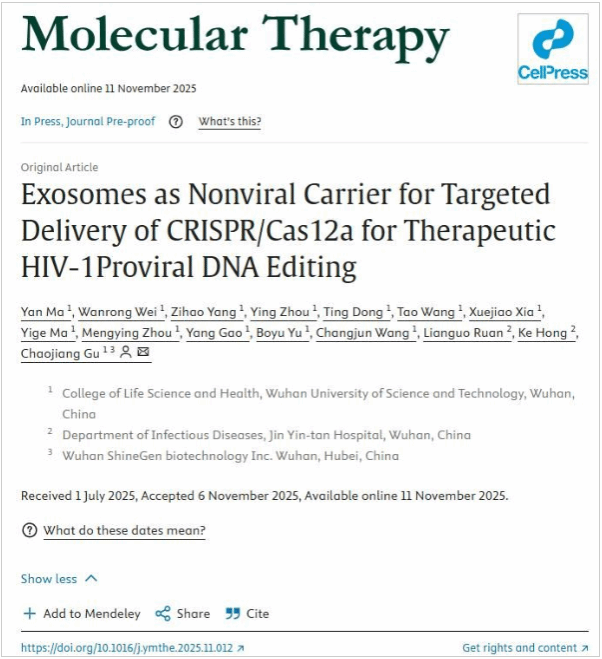
WUST News (Correspondents: Cheng Yu and Bi Haoyang) — On the occasion of the 38th World AIDS Day (December 1, 2024), whose global theme is "Collective Action, Innovation with Integrity, Ending AIDS," a groundbreaking study offering unprecedented hope toward ending the disease has been published in Molecular Therapy, a leading international journal under the Cell Press family.
This pioneering research, led by Professor Gu Chaojiang and his team at the College of Life Science and Health, Wuhan University of Science and Technology (WUST), introduces a novel therapeutic strategy named “EMT-Cas12a” (Exosome-Mediated Targeted CRISPR-Cas12a Delivery System). This approach uses engineered exosomes as precision carriers to deliver the gene-editing enzyme Cas12a directly into HIV-infected cells.
Exosomes are naturally occurring nanoscale vesicles that act as intercellular “couriers,” transporting proteins, RNA, and other biomolecules. Cas12a, often dubbed a "molecular scalpel", is a CRISPR-associated nuclease capable of precisely cleaving DNA sequences. In the EMT-Cas12a system, exosomes are modified to deliver Cas12a directly into HIV-infected cells, where it locates and shreds the integrated HIV proviral genome—potentially enabling functional cure of the infection.
While exosomes are biocompatible and naturally produced by human cells and naturally produced by human cells, their clinical application has been limited by difficulties in isolating high-purity exosomes and efficiently loading sufficient Cas12a for effective antiviral activity. Overcoming these challenges requires breakthroughs in both exosome purification and bioengineering.
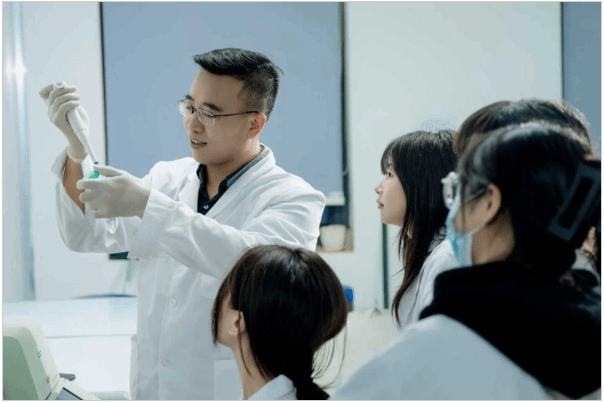
Professor Gu Chaojiang has dedicated himself to HIV research since 2005, mastered cutting-edge gene-editing technologies during his overseas studies. After returning to China in 2016, he began exploring exosomes as "biological couriers" for targeted therapy. After a decade of iterative experimentation, his team successfully developed the world's first exosome-based "gene-editing missile" system, capable of delivering multiple Cas12a units to simultaneously target multiple sites on the HIV genome. This addresses the long-standing global challenge of precisely identifying and eradicating latent HIV reservoirs.
HIV/AIDS remains one of medicine's most formidable challenges, no effective vaccine or curative treatment to date. Current approaches — such as combination antiretroviral therapy (commonly known as "cocktail therapy"), emerging immune-cell therapies, and gene-editing strategies using adeno-associated viruses (AAVs)—have limitations, including inability to eliminate latent virus, poor targeting specificity, and dose-dependent toxicity.
In contrast, the EMT-Cas12a platform offers high targeting precision, enhanced safety, and the ability to perform multiplexed, coordinated genome editing. Professor Gu Chaojiang's team tested the therapy in HIV-infected mice and blood samples from people living with HIV, demonstrating potent viral clearance and immune reconstitution capabilities. Notably, in one mouse cohort, two out of three animals achieved complete eradication of detectable HIV, indicating a highly effective and reliable strategy for eliminating the virus. The editorial board of Molecular Therapy has expressed strong endorsement of this work.
The technology has already passed rigorous medical ethics review and is poised to enter clinical trials. If successful, it could enable functional cure of HIV via simple intravenous injection, turning the once-fantastical notion of "curing AIDS with a shot" into clinical reality.
Molecular Therapy, a flagship journal of Cell Press, ranks among the world's top publications in medicine and bioengineering. Renowned as the "Noah's Ark of gene editing" and the "golden track of translational medicine", it is dedicated to advancing genetics, biotechnology, and clinical innovation.