WUST News From April 9 to 10, commissioned by the China Engineering Education Accreditation Association (CEEAA), a 9-member joint expert delegation conducted an on-site inspection of WUST’s Mechatronic Engineering, and Electrical Engineering and Automation programs. The delegation was led by Professor Jiang Zongli from Beijing University of Technology, a national-level famous teacher of higher education and senior CEEAA expert, who served as the joint team leader. Professor Dong Dawei from Southwest Jiaotong University and Professor Fan Yu from Beijing Jiaotong University acted as team leaders for the two programs respectively. The 7-member expert panel also included Professor Shi Yanguo from Yanshan University, Professor Zhang Jing, former Secretary of the Party Committee of Xiangtan University, Professor-level Senior Engineer Zhang Gang from Nanyang Explosion Protection Electrical Research Institute, and Professor Liu Guangchen from Inner Mongolia University of Technology. The delegation was accompanied by two secretaries: Associate Research Fellow Chen Yifang from Fujian Agriculture and Forestry University, and Chen Ping, Deputy Dean of the School of Information and Control Engineering at China University of Mining and Technology. Ni Hongwei, Secretary of the WUST Party Committee, and Chen Zhigang, Vice President of the university, attended relevant events.
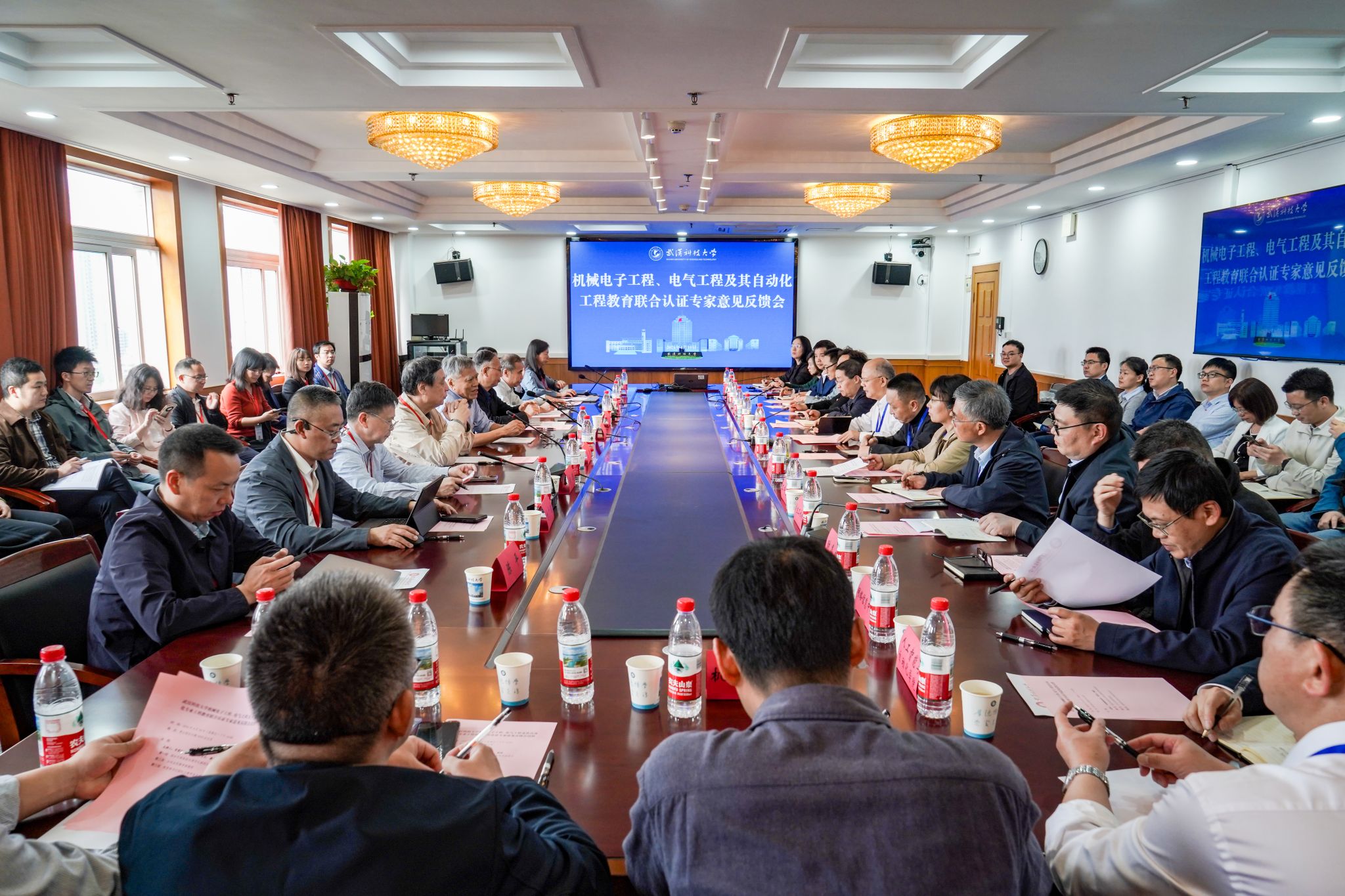
On the morning of April 9, the Opening Meeting of the joint expert panel was held. Professor Jiang Zongli, Joint Team Leader of the expert panel, introduced the purpose, content and arrangement of the on-site inspection for engineering education accreditation. Wang Xingdong, Deputy Dean of the School of Mechanical Engineering, and Chai Lin, Program Director of Electrical Engineering and Automation, reported on the development progress of the respective programs, and provided supplementary explanations and responses to the panel’s feedback on the Self-Assessment Report (SAR). Based on the issues reflected in the SAR and matters requiring further verification, the panel conducted inquiries and fact-checking with relevant functional departments, the schools, and faculty and staff of the programs.
During the on-site inspection, the panel paid field visits to the National Demonstration Center for Experimental Mechanical Engineering Education, the “Internet + Made in China 2025” Industry-Education Integration Innovation Base, the Institute of Robotics and Intelligent Systems, and specialized laboratories. The panel held interviews and focus group discussions with persons in charge of relevant university functional departments, school management staff, full-time teachers, current students, and representatives of employers and alumni. They also reviewed and verified a full range of documentation, including program training schemes, course files, outcome achievement evaluations, internship and practice reports, undergraduate theses (designs), as well as teaching management documents and records related to continuous improvement mechanisms.
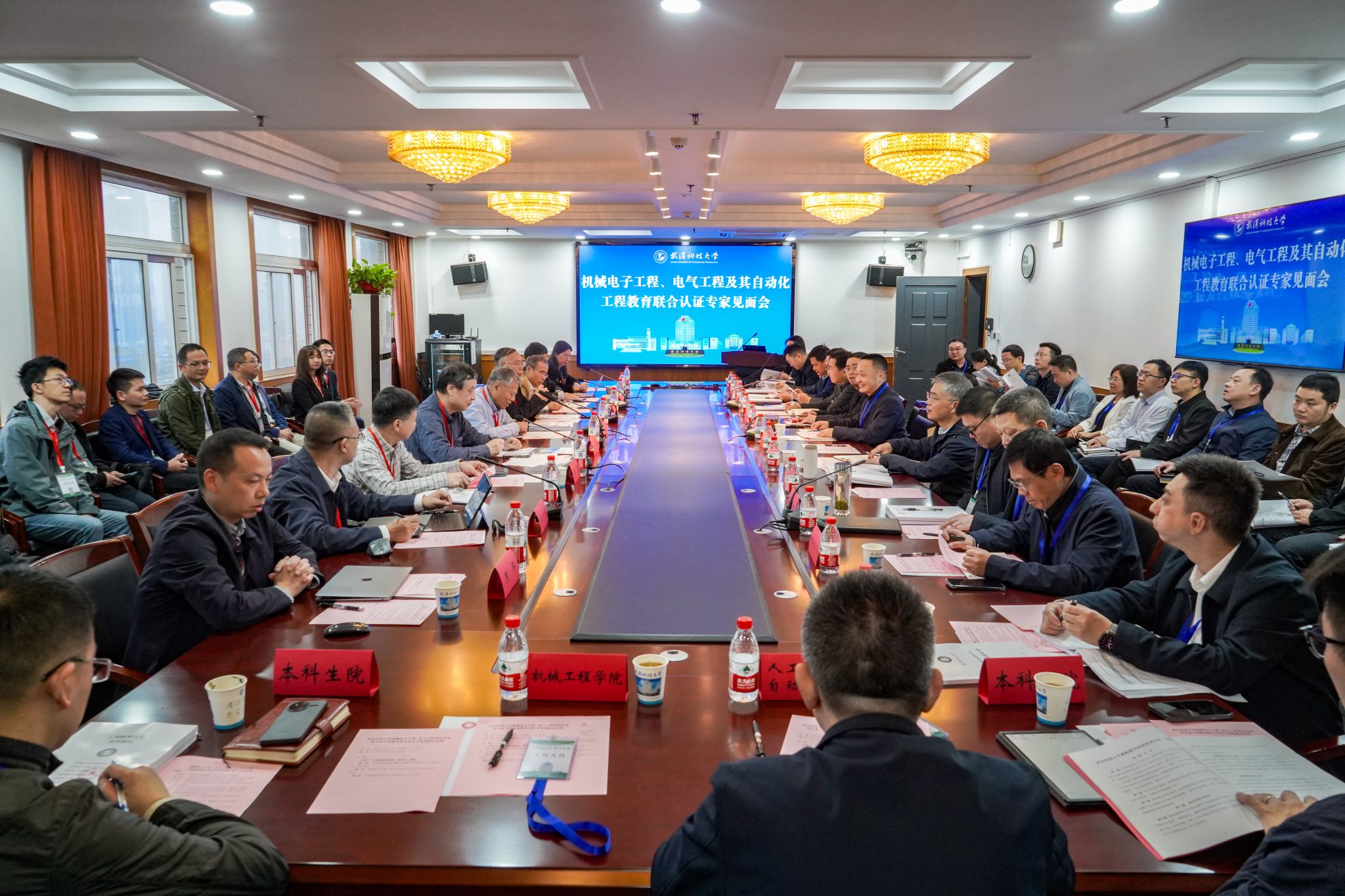
On the afternoon of April 10, the Feedback Meeting of the joint expert panel was convened. Professor Jiang Zongli delivered the overall inspection feedback on behalf of the panel. Professor Dong Dawei, leader of the inspection group for the Mechatronic Engineering program, and Professor Fan Yu, leader of the expert group for the Electrical Engineering and Automation program, presented program-specific inspection feedback respectively, with additional comments from other panel members. The panel fully affirmed the development achievements of the two programs, recognizing their progress in fulfilling program educational objectives and improving teaching and learning effectiveness. They also provided a detailed explanation of the issues identified during the inspection and the directions for improvement. Panel members shared their individual inspection findings covering talent development, curriculum system, faculty building, teaching resources, and continuous improvement, and put forward valuable, targeted comments and suggestions on the existing gaps and deficiencies in the development of the two programs.
On behalf of the university, Ni Hongwei expressed sincere gratitude to the experts for their hard work and meticulous guidance. He noted that the Mechatronic Engineering and Electrical Engineering and Automation programs are traditional advantaged programs of WUST with profound academic heritage. For years, the two programs have been deeply committed to teaching excellence, developed distinctive features, and achieved considerable progress and phased outcomes in talent development. With strict adherence to the CEEAA accreditation standards and a focus on the long-term development of the programs, the experts conducted a thorough, in-depth and rigorous verification of the educational performance, delivered a comprehensive diagnosis and analysis, and accurately pinpointed the core deficiencies. The comments and suggestions provided are both highly targeted and practicable. The university will take this accreditation inspection as an important opportunity to give full play to the guiding role of accreditation in undergraduate education. It will further strengthen the core capacity of school operation, refine every detail of teaching management, enhance scientific governance, highlight the distinctive features of its programs, and continuously improve the quality of talent development. These efforts will drive the university’s high-quality connotative development, and make WUST’s contributions to serving national strategies and local economic and social development.
Persons in charge of relevant university functional departments, leadership teams of the School of Mechanical Engineering and the School of Artificial Intelligence and Automation, as well as faculty representatives from relevant departments and teaching offices, attended the relevant meetings.